English
 Turkish
 Dutch
Dutch Greek
Greek English


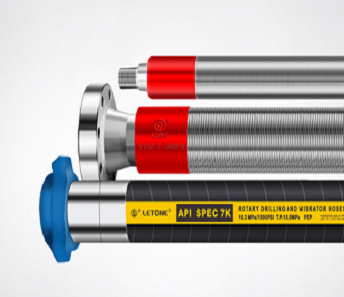
Liquid Cooling System Reliability Upgrade: EPDM High-Temperature Resistant Hoses Solve a Long-Standi
Common Problems of Traditional Hoses
Many early failures in past liquid cooling projects were directly related to the performance shortcomings of the hoses: after prolonged high-temperature operation, impurities precipitated on the inner wall of the hose, clogging the cold plate flow channels; after one or two years of use, the hose hardened and became brittle, cracking and leaking; and sealing failure occurred at the hose joints under alternating hot and cold temperatures. These problems not only damage server hardware but can also cause business interruptions, resulting in incalculable losses to data centers. The key to completely solving these pain points is finding a fluid transport component that can withstand the high-temperature operating conditions of liquid cooling systems for extended periods.
Targeted Solution from EPDM Material
Addressing these industry pain points, EPDM high-temperature resistant liquid cooling hoses have achieved a performance upgrade from the material itself. Its molecular structure does not contain low-molecular-weight additives that are easily dissolved by coolant, and it will not precipitate on the inner wall even after long-term immersion in coolant at operating temperature, completely avoiding the risk of cold plate blockage. Meanwhile, its high-temperature resistance has been specifically optimized, maintaining stable elasticity within the normal operating temperature range of liquid cooling systems. It avoids the thermo-oxidative aging problems common in ordinary rubber, significantly extending the safe service life of the hose.
Long-Term Value for the Future
As data center PUE requirements continue to tighten, the long-term operational efficiency of liquid cooling systems is receiving increasing attention. The stable fluid transport performance of EPDM high-temperature resistant hoses ensures that the resistance of the entire liquid cooling circuit remains stable over the long term. Flow rate reduction due to scaling or deformation of the hose's inner wall prevents this, ensuring that the cooling plate's heat dissipation efficiency remains within its optimal design range. This long-term stable performance not only reduces maintenance costs for liquid cooling systems but also supports future iterations of higher-power server hardware, reserving ample thermal redundancy for long-term computing power upgrades in data centers.