English
 Turkish
 Dutch
Dutch Greek
Greek English


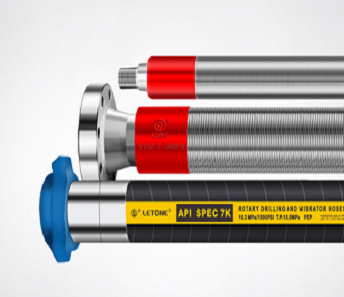
From Media Compatibility to All-Condition Adaptability: Glycol-Resistant Liquid Cooling Hoses Solve
Ethylene Glycol Corrosion Risks of Ordinary Piping
In the past, many liquid cooling projects experienced various hidden faults after using ethylene glycol coolant for two or three years: impurities precipitated on the inner wall of the hose accumulated in the microchannels of the cold plate, leading to a year-on-year decrease in heat dissipation efficiency; seal failure occurred at the hose joints due to material swelling, causing slow leakage; and the surface of the hose, after long-term contact with ethylene glycol, cracked and suddenly broke under equipment vibration. These problems mostly stemmed from neglecting the long-term tolerance of the hose to ethylene glycol during the selection phase, referring only to short-term test data at normal water temperatures, ultimately bringing unnecessary downtime risks and hardware losses to the data center.
Targeted Optimized Corrosion Resistance
Glycol-resistant server liquid cooling hoses underwent extreme testing far exceeding actual operating conditions during the R&D phase: after being continuously immersed in an ethylene glycol mixture at temperatures higher than normal operating temperatures for thousands of hours, the hose's weight change rate and volume expansion rate were controlled at extremely low levels in the industry, while its physical tensile strength and elasticity retention rate still met design standards. Its inner wall undergoes a special process, resulting in a smooth, non-porous surface that prevents corrosion inhibitors and additives in ethylene glycol from adhering and depositing. Even after long-term operation, it does not experience scaling or narrowing of the flow channels, maintaining a consistently stable flow delivery capacity.
Comprehensive Value for Complex Deployment Scenarios
These specialized hoses are also adaptable to various special operating conditions of ethylene glycol coolant systems: In scenarios with significant temperature fluctuations, such as low-temperature shutdowns or high-temperature full-load conditions, it does not suffer from material fatigue due to repeated thermal expansion and contraction, maintaining reliable seals at the interfaces. In special deployment environments such as outdoor edge computing stations and non-constant-temperature backup server rooms, the antifreeze properties of ethylene glycol coolant combined with the hose's media resistance allow the liquid cooling system to operate safely within a wide temperature range of -20℃ to 80℃, eliminating the need for additional heating or temperature control equipment. This combination of chemical stability and environmental adaptability makes it an irreplaceable core component in ethylene glycol liquid cooling systems, removing piping-level obstacles for computing deployments across all scenarios.