English
 Turkish
 Dutch
Dutch Greek
Greek English


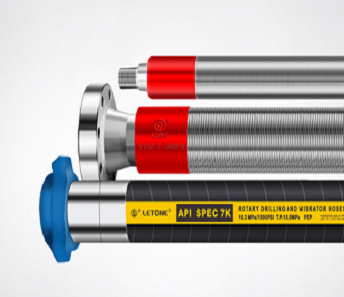
Oilfield Acidizing Drilling Hoses: Versatile Adaptability for Complex Operating Conditions and Multi
Universal Adaptability Covering the Entire Oilfield Operation Chain
Oilfield acidizing drilling hoses are not limited to a single acidizing fracturing scenario. Thanks to their balanced and comprehensive performance, they can adapt to various complex fluid transport scenarios across the entire oilfield development chain. In conventional proppant fracturing operations, they can safely transport fracturing fluids with high proppant content, resisting abrasive erosion over long periods. In cementing operations, they can transport high-viscosity cement slurry without the problems of cement particle abrasion, internal adhesion, or pipeline blockage. In subsequent well workover operations, they can also transport kill fluids containing hydrogen sulfide, withstanding long-term corrosion from complex and corrosive media. Even in more demanding development scenarios such as shale oil and gas and deep/ultra-deep oilfields, this hose can meet the fluid transport needs on-site with its stable performance, achieving a universal application effect of "one type of hose adaptable to multiple types of operations," significantly reducing the types of spare parts stockpiled and management costs at the oilfield site.
Long-Term Stable Operation in Extreme Field Environments
For various extreme environments encountered in oilfield operations, the oilfield acidizing drilling hose has undergone comprehensive performance enhancements. In terms of temperature adaptability, it can operate stably within a wide temperature range of -40℃ to 120℃. Whether in the extremely cold winters of the Northeast oilfields or the high temperatures of the western desert oilfields in summer, the hose maintains excellent flexibility and structural strength, without issues such as low-temperature brittleness or high-temperature softening and delamination. Regarding outdoor weather resistance, the outer rubber layer is formulated with UV resistance and oilfield contamination resistance. Even after long-term open-air storage at the well site, there will be no rapid cracking or peeling of the outer rubber layer, resulting in a significantly longer idle lifespan than ordinary rubber hoses. In terms of drag resistance, the outer rubber layer's ultra-high abrasion resistance means that even when the hose is dragged and rubbed against rough gravel surfaces or steel derricks, the outer layer will not wear through in a short time, perfectly adapting to the frequent pipeline relocation habits in oilfield operations.
Driving Technological Upgrades in Oilfield Fluid Transportation
The widespread adoption of acidizing drilling hoses in oilfield operations is driving technological iterations in oilfield fluid transportation. Previously, many well sites had to use heavy steel rigid manifolds to reduce hose length in order to extend pipeline lifespan, resulting in significant manpower and time consumption for the entire transportation system's installation and relocation. The emergence of high-performance acidizing drilling hoses allows flexible pipelines to replace rigid manifolds in more scenarios, significantly reducing the weight of the entire transportation system and increasing on-site installation and relocation speed several times over, thus significantly improving the overall mobility efficiency of oilfield operations. Simultaneously, the hose's full-flow, non-reduced-diameter design greatly reduces internal fluid resistance, and also reduces pump energy consumption during fracturing operations. In long-term, large-scale operations, this can save considerable energy costs for oilfield projects, driving the entire oilfield fluid transportation process towards greater efficiency, safety, and lower costs.