English
 Turkish
 Dutch
Dutch Greek
Greek English


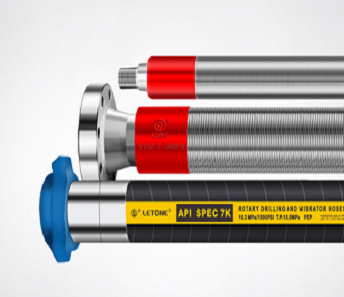
High-Pressure Pipeline in Oil Wells: Comprehensive Downhole Adaptability for Complex Working Conditi
Universal Downhole Adaptability Covering the Entire Oilfield Development Chain
High-pressure pipelines in oil wells are not limited to a single oil production and transportation scenario. Thanks to their balanced and comprehensive performance, they can adapt to various downhole fluid transportation scenarios across the entire oilfield development chain. In conventional oil production wells, they can serve as downhole oil production pipelines, transporting produced fluids containing sand and corrosive media over long periods, withstanding complex downhole conditions. In water injection wells, they can serve as high-pressure water injection pipes, transporting high-pressure injection water and resisting tubing fatigue caused by long-term high-pressure water injection. In acid fracturing wells, they can serve as downhole high-pressure fracturing pipes, transporting high-concentration acidizing fluids and sand-containing fracturing fluids, withstanding strong corrosion and abrasive erosion. Even in more demanding development scenarios such as deep and ultra-deep oil wells and sulfur-containing gas wells, this high-pressure pipe can meet the long-term usage requirements at depths of thousands of meters downhole thanks to its stable performance. This achieves a universal application effect of "one type of pipe material suitable for multiple types of oil wells," significantly reducing the variety and management costs of spare parts for oilfield downhole equipment.
Long-term Stable Operation Performance in Extreme Downhole Environments
The high-pressure pipe in oil wells has undergone comprehensive performance enhancements to address various extreme and confined environments. In terms of temperature adaptability, it can operate stably for extended periods within a wide temperature range of -40℃ to 180℃. Whether in low-temperature shallow oil wells or deep, high-temperature ultra-deep wells, the structural strength and sealing performance of the pipe will not show significant degradation, and there will be no issues of softening and delamination at high temperatures or brittle fracture at low temperatures. Regarding corrosion resistance, the material formulation of the inner lining can be flexibly adjusted for oil wells with different corrosion types. Whether it's a high-hydrogen sulfide well, a high-carbon dioxide well, or a high-salinity brine well, a corresponding anti-corrosion solution can be matched, and there will be no localized pitting or perforation issues during long-term operation. In terms of fatigue resistance, the tubing can withstand millions of pressure pulsations downhole and will not experience structural fatigue failure even under long-term alternating loads, with a service life far exceeding that of traditional steel tubing.
Driving Technological Upgrades in Downhole Fluid Transportation
The widespread adoption of high-pressure tubing in oil wells is driving technological upgrades in downhole fluid transportation. Previously, many oil wells had to use extremely expensive special alloy steel tubing to improve the corrosion resistance of the tubing string, resulting in high procurement costs for the entire tubing string. Many wells with low marginal returns could not afford such equipment. However, the emergence of high-performance downhole high-pressure tubing allows highly reliable flexible tubing to replace expensive special alloy steel tubing in more scenarios, reducing the procurement cost of the entire tubing string by more than 40%. At the same time, the weight of flexible tubing is much lower than that of traditional steel tubing, eliminating the need for large-tonnage workover rigs during well operations, significantly lowering the equipment threshold and cost of well workover operations. Some continuous, jointless high-pressure pipes can also achieve continuous running downhole without couplings, completely eliminating fluid throttling and corrosion blind spots at the coupling locations of traditional oil pipes. This significantly reduces the frictional resistance of downhole fluid transportation, improves the production efficiency of oil wells, and promotes the upgrading of the entire downhole fluid transportation process in the oilfield towards greater efficiency, safety, and lower cost.