English
 Turkish
 Dutch
Dutch Greek
Greek English


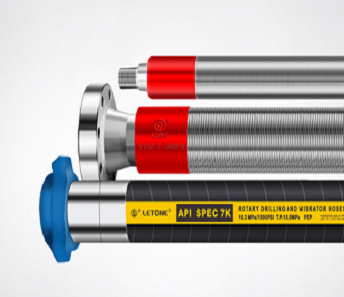
Liquid Cooling Hoses for Data Center Retrofits: Versatile Adaptability for Complex Scenarios in Vari
Universal Adaptability Covering All Data Center Retrofit Scenarios
Liquid cooling hoses for data center retrofits are not limited to single rack-level liquid cooling retrofit scenarios. With balanced and comprehensive performance, they can adapt to various liquid cooling upgrade needs in different types of existing data centers. In traditional tower server data center retrofits, they can flexibly adapt to older racks of different brands and eras, completing quick connections between cold plates and rack distributors without altering the main rack structure. In high-density AI computing power data center retrofits, they can stably handle the circulation of high-flow-rate coolant, meeting the high-flow-rate heat dissipation needs of high-power GPU servers. In edge micro-data center retrofits, they can bend and lay hoses within extremely compact, limited spaces, adapting to the confined layout characteristics of edge data centers. Even in research computer rooms and financial core server rooms with extremely high cleanliness requirements, this specialized liquid cooling hose can ensure the long-term cleanliness of the liquid cooling circuit due to its extremely low leaching characteristics. This achieves a universal application effect of "one type of hose adaptable to multiple types of server room renovations," significantly reducing the types of spare parts and management costs for IDC renovation projects.
Long-term stable operation performance in the special enclosed environment of server rooms
For the special environment of enclosed server rooms and 24-hour continuous operation, the liquid cooling hose for server room renovations has undergone comprehensive performance enhancements. In terms of temperature adaptability, the entire hose can operate stably in a wide temperature range from -20℃ to 100℃, completely covering the temperature range of normal liquid cooling system operation. It can operate in a constant temperature server room environment for a long time without sealing failure due to thermal expansion and contraction. In terms of aging resistance, the hose material has been specially modified, and in the mild environment of the server room without ultraviolet radiation and oil contamination, its continuous stable service life can reach more than 10 years, far exceeding the service life of ordinary industrial hoses, significantly reducing the frequency of subsequent pipeline replacements. In terms of leak-proof design, the hose and connector adopt an integrated crimping molding process. The sealing performance of the connector has been verified through long-term pressure testing at 1.5 times the rated pressure, completely eliminating the risk of leakage at the connector and fully meeting the stringent requirements of 24/7 uninterrupted operation in data centers.
Driven by Flexible Process Innovation for Upgrading Computing Power in Existing Data Centers
The widespread adoption of liquid cooling hoses in data center retrofits is driving the iterative upgrade of liquid cooling retrofit processes in existing data centers. Previously, many older data centers required rigid metal piping solutions for liquid cooling upgrades, which were not only costly and time-consuming but also required long-term, large-scale downtime. Many data centers where uninterrupted operations were impossible to retrofit. The emergence of high-performance liquid cooling hoses for data center retrofits allows flexible piping solutions to be implemented in the vast majority of existing data centers. The retrofit process barely damages the original building structure, and the area-based construction model does not affect the continuous operation of existing businesses. This allows many older data centers that previously could not be upgraded to liquid cooling to upgrade their high-density computing power capacity at low cost and with low risk. At the same time, the lightweight nature of flexible hoses will not impose an additional burden on the floor load of older data centers, solving the core pain point that many early data centers with low load-bearing capacity dare not deploy liquid cooling systems on a large scale, and promoting the heat dissipation upgrade of the entire existing IDC industry, rapidly developing towards low intrusion, high flexibility, and high cost performance.