English
 Turkish
 Dutch
Dutch Greek
Greek English


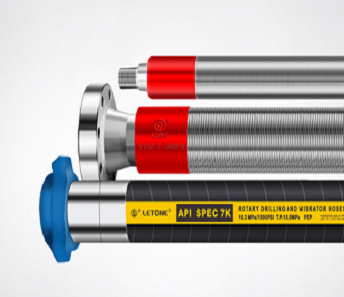
From Standard Temperature to Wide Temperature Range: The Logic of Expanding the Applications of Nitr
General-purpose nitrile rubber hoses are often insufficient for different operating conditions.
Many maintenance personnel habitually order nitrile rubber hydraulic hoses based solely on "diameter + pressure," resulting in frequent problems on-site: In the hydraulic systems of outdoor construction machinery in northern winters, ordinary nitrile hoses harden directly at low temperatures, and the pipe walls collapse after bending, obstructing hydraulic oil flow and causing equipment malfunctions; in near-heat source scenarios in metallurgical workshops, ordinary nitrile hoses, due to prolonged proximity to high-temperature equipment, experience rapid aging and cracking of the outer layer, becoming unusable within six months.
80% of the actual wear and tear on nitrile rubber hydraulic hoses does not come from static pressure testing, but from hidden conditions such as temperature fluctuations, media differences, and environmental corrosion during daily operation. If only basic parameters are considered during the selection phase, ignoring these scenario details, even if the material is pure nitrile, it is difficult to achieve the designed service life.
Optimized Formula and Structure to Cover All Scenarios
Nitrile rubber hydraulic hoses designed for outdoor operations in cold regions utilize a low-temperature modified nitrile inner layer formula, combined with a low-temperature flexible reinforcement layer. Even after being placed in an extreme low-temperature environment of -40℃ for 24 hours, they can still withstand small-angle bending without wall cracking or a sudden drop in pressure resistance, making them perfectly suited for winter operations in cold-region mines and construction machinery.
Nitrile rubber hydraulic hoses designed for high-temperature, near-heat-source scenarios such as metallurgy and injection molding machines feature an additional heat-insulating composite layer integrated in the middle of the hose body, combined with a high-temperature-resistant modified nitrile inner layer. They can withstand continuous scouring of hydraulic oil at 120℃ for extended periods, significantly reducing the outer surface temperature. This prevents rapid aging of the outer rubber and protects on-site maintenance personnel from accidental burns. For hydraulic systems requiring anti-static properties, a conductive formula can be added to the inner layer to prevent safety hazards caused by static electricity buildup.
Full-process selection support avoids wasted resources due to mismatch issues.
A mature solution for matching nitrile rubber hydraulic hoses doesn't involve simply pushing fixed-specification products to users. Instead, it begins by clearly defining the core operating conditions of the project: What is the specific grade of hydraulic oil used daily? What are the highest and lowest temperature ranges for long-term operation? Does the hose require frequent bending or proximity to heat sources? Are there any special requirements such as anti-static properties or resistance to special media?
By matching the appropriate nitrile grade, reinforcement structure, and parameters based on these actual conditions, we avoid both over-performance leading to wasted procurement costs and under-match issues causing premature damage. For example, a typical indoor machine tool hydraulic station doesn't need a high-cost, low-temperature resistant steel wire braided nitrile hose; a conventional fiber-reinforced nitrile hose is perfectly adequate, offering better cost-effectiveness and ensuring long-term safety.