English
 Turkish
 Dutch
Dutch Greek
Greek English


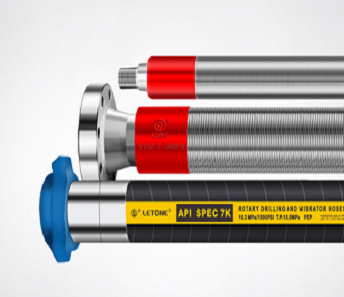
The performance differences in hydraulic system hoses lie in the details of dynamic operating condit
90% of hose failures are unrelated to static pressure resistance.
Many maintenance personnel judge the lifespan of hydraulic system hoses solely by their static burst pressure parameters, believing that as long as the rated pressure exceeds the system's maximum pressure, it's合格 (qualified). However, in actual industrial scenarios, over 90% of hose failures are not due to instantaneous pressure exceeding the static pressure limit, but rather to hidden damage caused by long-term, high-frequency pressure pulses, repeated bending, and temperature fluctuations.
In continuously operating hydraulic systems such as automated production lines and construction machinery, hydraulic pumps perform dozens of pressure output adjustments per minute, and the actuator cylinders reciprocate thousands of times daily. The rubber and reinforcing layers inside the hose are repeatedly stretched and compressed with pressure changes. If the product's manufacturing process is substandard, even if the static pressure resistance is perfectly acceptable, problems such as delamination, wire breakage, and hose bursting will occur after a few thousand pulses.
Optimizing manufacturing details to adapt to the complex dynamic operating conditions of hydraulic systems.
Hoses that truly support the long-term stable operation of hydraulic systems undergo targeted optimization in many unseen details. The steel wire or fiber reinforcement layer undergoes surface pretreatment before braiding, significantly improving the adhesion strength with the inner and outer rubber layers. This prevents interlayer delamination under long-term pulse impact, avoiding localized bulging and failure of the hose.
The inner rubber layer uses a special formula with low compression set, preventing permanent deformation and inner diameter reduction even under long-term high-pressure extrusion. This ensures smooth hydraulic oil flow, preventing additional pressure loss and maintaining the overall hydraulic system's response accuracy. The braiding angle and tension of the reinforcement layer are precisely calculated mechanically to keep the hose's elongation under pressure within a minimal range, preventing significant length changes as pressure increases. This avoids additional tensile stress at pipe connections, reducing the probability of oil leakage at the joints. Even with thousands of bending cycles per day, it maintains a stable operating life of tens of thousands of hours.
Full-process testing and verification prevents potential problems before installation.
A mature hydraulic system hose production system doesn't rely solely on final product pressure testing for quality control; it has established a complete full-cycle verification system. Every batch of raw materials entering the factory undergoes oil resistance and tensile strength testing; substandard materials are immediately intercepted before reaching the production line.
Finished products are sampled and subjected to pulse fatigue testing, low-temperature bending testing, and ozone aging resistance testing, all exceeding industry standards, to ensure stable performance under varying temperatures and operating conditions. For scenarios with special requirements, additional specialized verifications such as antistatic and flame retardant testing can be performed, fully meeting the compliance requirements of hydraulic systems in specialized industries such as metallurgy and food processing, ensuring that not a single substandard hose reaches the installation stage.