English
 Turkish
 Dutch
Dutch Greek
Greek English


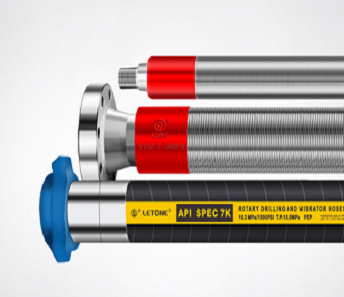
The performance differences in large-diameter wear-resistant and clog-resistant conveying hoses lie
90% of premature failures are not due to wear-through but secondary failures caused by hidden blockages.
Many maintenance personnel judge the lifespan of large-diameter conveying hoses by only looking at the outer layer's wear resistance, assuming that as long as the outer layer doesn't wear through, there won't be any problems. However, in actual particle conveying scenarios, over 90% of hose premature failures are not due to outer layer wear-through, but rather to localized wear of the inner layer creating uneven surfaces. Material begins to deposit and scale in these depressions, narrowing the flow channel, continuously increasing conveying resistance, and eventually causing complete blockage. The sudden increase in system pressure directly bursts the hose.
This failure mode is completely unrelated to the outer layer's wear resistance; the core challenge lies in the uniformity and smoothness of the inner layer's erosion resistance. If the inner layer's rubber formulation and extrusion process are substandard, even the thickest and most wear-resistant outer layer will quickly lead to blockages and bursts.
End-to-end process optimization solves the dual pain points of large-diameter particle conveying
Truly stable, long-term operation in particle conveying scenarios with large-diameter wear-resistant and clog-resistant conveying hoses doesn't rely solely on thickening the inner rubber layer to improve wear resistance. Instead, it employs a multi-layered, synergistic design to simultaneously address the two core pain points of "wear" and "clogging." The inner layer utilizes a one-piece extrusion molding process, resulting in a completely uniform smoothness throughout the hose's inner wall, without seams or localized depressions. This prevents material from adhering to the wall and depositing, thus fundamentally preventing particle scaling.
The middle high-strength reinforcing layer, based on precise mechanical calculations, ensures the hose maintains over 98% roundness under rated operating pressure. This prevents localized bulging of the hose wall or deformation of the flow channel under pressure, guaranteeing a uniform and unobstructed flow throughout the hose and preventing localized slowdowns that could lead to material deposition. The inner rubber layer uses a highly elastic, wear-resistant formula. Even when high-speed particles directly impact the hose wall, slight elastic deformation buffers the impact, resulting in a wear life 2-3 times longer than ordinary rubber inner layers, significantly slowing down the wear rate of the hose wall. Rigorous comprehensive testing and verification prevents wear and blockage risks before deployment.
A mature production system for large-diameter, wear-resistant, and anti-clogging conveying hoses goes beyond conventional pressure tests for quality control. A dedicated particle conveying testing platform simulating real-world working conditions has been built. Each batch of products undergoes hundreds of hours of cyclic flushing tests with particle-laden media, monitoring the wear rate of the inner wall and the flow status within the hose in real time. This verifies whether material accumulation and blockage will occur during long-term transport, and any batches that fail to meet standards are immediately rejected before leaving the production line.
Finished products also undergo simultaneous pressure testing, low-temperature bending testing, and tear resistance verification to ensure stable performance under various complex conditions such as mining, dredging, and construction. For scenarios with special needs, additional food-grade compliance verification and anti-static testing can be performed, fully adapting to the compliance requirements of special industries such as grain conveying and chemical particle transfer, ensuring that no substandard hose reaches the field.