English
 Turkish
 Dutch
Dutch Greek
Greek English


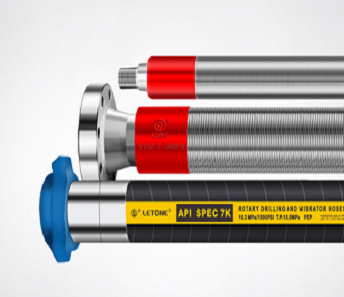
The performance gap in UHMWPE chemical-resistant hoses lies in the details of complex operating cond
90% of premature failures are not due to material defects but rather structural and manufacturing flaws.
Many maintenance personnel, when using UHMWPE chemical-resistant hoses, tend to only look at the nominal performance of the raw materials, assuming that as long as the inner layer is made of UHMWPE, it can be directly adapted to all abrasive scenarios. However, after actual deployment, it is quickly discovered that many inferior products experience inner layer delamination and peeling from the outer reinforcement layer after a short period of operation, with the hose body bulging and failing. This is mistakenly attributed to substandard UHMWPE material performance.
These failures are completely unrelated to the material's inherent properties; the core issue is substandard processing of the hose's composite structure: UHMWPE material itself has extremely high surface inertness. Without special activation treatment, direct bonding with the outer rubber or reinforcement layer results in very weak interlayer adhesion. Under long-term pressure pulsation and temperature changes, delamination will quickly occur, rendering the excellent performance of UHMWPE material ineffective.
End-to-end process optimization ensures that material advantages are fully translated into product performance.
Truly stable UHMWPE chemical-resistant hoses capable of long-term operation under complex conditions are not produced simply by laminating the inner layer. Instead, end-to-end process optimization completely solves the industry pain point of UHMWPE material's difficulty in bonding. Before lamination, the inner UHMWPE pipe undergoes a special surface activation treatment, generating active groups on the originally inert pipe surface. This achieves high-strength bonding with the outer adhesive and reinforcing layers, resulting in interlayer adhesion strength far exceeding industry standards. Even under long-term high-pressure pulses and alternating temperature conditions, issues such as interlayer delamination and bulging will not occur.
By adjusting the UHMWPE extrusion process, the density of the inner layer is further improved, reducing the media penetration rate to an extremely low level. Corrosive media can hardly penetrate the inner layer to reach the outer reinforcing structure, fundamentally preventing the reinforcing layer from corroding and failing. For cryogenic transport scenarios, leveraging the excellent low-temperature impact resistance of UHMWPE material, the hose maintains superior impact resistance even in temperatures as low as -40℃, unlike ordinary plastic hoses which tend to crack at low temperatures.
Rigorous comprehensive testing and verification prevents structural defects from entering the market.
A mature UHMWPE chemical-resistant hose production system goes beyond routine pressure testing for quality control. It specifically tests interlayer adhesion strength. Each batch of products undergoes interlayer peel force testing and high/low temperature cycling testing to verify that the interlayer structure maintains stable bonding under long-term temperature fluctuations. Unqualified batches are immediately rejected before leaving the production line.
Finished products simultaneously undergo abrasion composite condition cycling testing, burst pressure verification, and media immersion resistance verification to ensure stable performance under various operating conditions. For scenarios with special requirements, additional food contact safety compliance verification and antistatic testing can be performed, fully adapting to the compliance requirements of special industries such as food particle conveying and the transfer of flammable and explosive chemical media, ensuring that no substandard hose reaches the field.