Common Misconceptions in Selecting Mine Hose: Focusing Only on Diameter, Ignoring Wear Resistance an
Many mines easily fall into the trap of prioritizing diameter over performance when purchasing mud conveying hoses: they assume that as long as the inner diameter matches the interface, it can be used to transport mud. However, after actual use, they find that ordinary hoses with thin inner layers simply cannot withstand the continuous erosion of ore sand, wearing through in just over ten days; hoses without high-strength reinforcement layers are prone to localized bulging or even bursting during high-pressure pumping; and the outer layer material is not resistant to the complex underground environment, being torn and punctured by sharp ore within a short time. While seemingly saving a little money on hose procurement, the result is frequent downtime due to malfunctions, leading to production losses several times or even dozens of times greater.
Core Selection Dimensions Breakdown for Precise Matching of Mine Operating Conditions
To select truly durable industrial mud hoses for mining, one cannot only look at the diameter and unit price. It is essential to consider the actual operating conditions of the mine and verify each hose from three core dimensions. First, the inner layer's wear resistance level is crucial. The thickness of the inner layer should be selected based on the hardness, concentration, and flow rate of the solid particles in the pumped slurry. The sharper the particles and the faster the flow rate, the higher the wear resistance and thickness of the inner layer need to be, allowing for sufficient wear tolerance. Second, pressure-bearing safety redundancy is essential. Based on the actual maximum working pressure of the pump, a reinforcement level with a safety factor of 1.5-2 times should be selected. For high negative pressure suction conditions, the pipe's anti-collapse performance must be additionally confirmed to prevent pipe collapse and blockage during operation. Third, the outer layer's protective performance is critical. In open-pit mines, a weather-resistant outer layer with added UV-resistant additives should be selected, while in underground mines, a special outer layer formula with tear resistance and flame retardancy should be chosen to suit the specific environmental requirements.
Integrated flange assembly delivery avoids weak points during on-site installation.
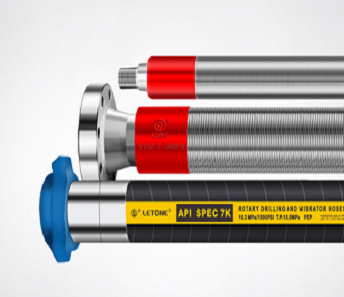
Many hose failures in mines are not actually caused by the pipe itself, but by problems in the joint connection. On-site workers often use hose clamps and wire to bind ordinary hoses and steel pipes, which can easily lead to joint slippage and slurry leakage under the continuous impact of high-pressure slurry. Qualified industrial hoses for mining mud are mostly pre-assembled in the factory with high-strength flange joints professionally crimped according to the flange specifications of the equipment on site, delivering complete hose assemblies directly. The standardized crimping process in the factory ensures a firm connection between the joint and the hose body, completely eliminating the risk of high-pressure slippage and leakage. Users can directly connect the finished product to the equipment flange and tighten the bolts for quick installation, eliminating the need for additional on-site processing and avoiding the risk of failure caused by improper installation from the outset.
Full Life Cycle Cost Accounting: Rejecting the Trap of Low Price and Low Quality
Many mines, when calculating hose costs, only compare the unit price of a single purchase, ignoring the lifespan and hidden downtime losses caused by failure. Low-priced, low-quality mud hoses may wear through and become unusable after only a few weeks. The accumulated material and labor costs of repeated replacement purchases far exceed the purchase price of a qualified industrial-grade hose. In contrast, compliantly manufactured industrial hoses for mining mud, when correctly selected and used according to regulations, have a lifespan several times longer than ordinary hoses, resulting in a lower consumable cost per unit of transport volume in the long run. More and more large-scale mines are no longer purchasing mud hoses as low-value consumables at will. Instead, they regard them as key components to ensure the stable operation of the conveyor line, and choose compliant and durable industrial-grade products to significantly reduce the overall operation and maintenance costs of the entire mud conveyor line in the long run.

 English
 Turkish
 Dutch
Dutch Greek
Greek English