The Industry Pain Points of High-Flow Corrosive Media Transportation: The Double Shortcomings of Ord
Many operation and maintenance teams in the chemical, metallurgical, and wastewater treatment sectors have long been troubled by the challenge of transporting high-flow-rate corrosive media. While traditional rigid metal pipes have strong pressure resistance, they are prone to corrosion and perforation under long-term erosion by acidic and alkaline media. Furthermore, their rigid structure is difficult to adapt to the flexible piping requirements of complex terrains. Ordinary small-diameter acid and alkali resistant flexible hoses not only have limited diameters that cannot meet the requirements of high-flow-rate transportation, but also lack the support of a high-strength reinforced frame, making them prone to collapse and bursting under high-pressure pumping or high-negative-pressure suction conditions. Once a pipeline experiences a sudden corrosion leak, the corrosive media gushing out can damage on-site equipment and potentially trigger safety and environmental accidents. The cost of subsequent repairs and cleanup often far exceeds the initial investment in the pipeline itself. The emergence of large-diameter steel wire reinforced acid and alkali resistant industrial flexible hoses precisely fills this long-standing industry gap, providing a flexible solution that balances safety and efficiency for transporting high-flow-rate corrosive media.
A three-layer composite directional structure simultaneously meets three core requirements: large diameter, strong corrosion resistance, and high pressure resistance.
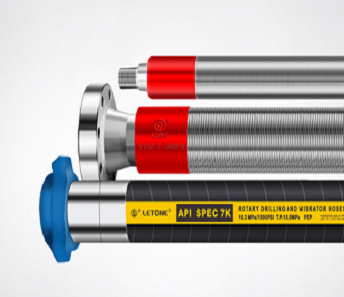
From the initial design stage, this large-diameter steel wire reinforced acid and alkali resistant industrial hose features triple core performance enhancements for these extreme working conditions. The innermost layer uses an ultra-thick special acid and alkali resistant polymer material, ensuring that even with prolonged contact with various corrosive industrial media such as dilute sulfuric acid, hydrochloric acid, and strong alkali salts, there will be no swelling, corrosion, or leakage. The smooth surface of the inner layer also reduces the adhesion of solid particles, preventing pipe blockage after long-term use. The middle layer uses multiple layers of high-strength steel wire as a reinforcing skeleton, maintaining excellent pressure resistance while supporting large diameters from DN200 to DN1000. It can withstand the impact of high-pressure pumping and maintain the tube's roundness under high negative pressure suction conditions, completely preventing the tube wall from collapsing. The outer layer uses an aging-resistant and tear-resistant protective material, ensuring that even with long-term use in complex industrial environments such as outdoor exposure, humidity, and dust, the outer layer will not quickly crack, age, or become brittle. The entire composite structure is free of redundancy, with each layer precisely addressing the core requirement of high-flow-rate corrosive transport.
Deeply adaptable to all scenarios, covering corrosive transport links across multiple industries
This industrial flexible hose is suitable for virtually all industrial scenarios requiring high-flow-rate transport of corrosive media. In chemical industrial parks, it can be used to transport acidic and alkaline chemical raw materials and corrosive wastewater at high flow rates, replacing traditional rigid pipes as flexible connection sections, absorbing displacement caused by thermal expansion and contraction of pipes, and preventing stress concentration cracking of rigid pipes; in the non-ferrous metallurgical industry, it can transport corrosive slurries and hydrometallurgical slurries, while resisting the dual erosion of strong abrasion and strong corrosion; in large municipal wastewater treatment plants, it can transport high-concentration sludge and corrosive process wastewater at high flow rates, withstanding long-term immersion in complex media; in emergency rescue scenarios, it can be quickly deployed to build temporary pipelines, efficiently transporting corrosive emergency waste liquids without complex installation procedures, and forming a high-flow-rate transport channel in a short time.
Long-term cost reduction and efficiency improvement, fundamentally reducing safety hazards in corrosive media transportation
Many companies have seen a significant reduction in pipeline replacement frequency after replacing their hoses with compliant, large-diameter, steel-wire-reinforced, acid and alkali-resistant industrial hoses. Previously, ordinary pipelines would corrode and penetrate within months; now, qualified industrial-grade hoses can operate stably for several years, significantly reducing spare parts procurement costs and on-site replacement labor costs. More importantly, the probability of sudden corrosion leaks is minimized, eliminating the risk of corrosive media leaks due to pipeline failures. This avoids a series of chain reactions such as equipment damage, environmental violations, and personnel safety hazards, allowing the entire corrosive media transportation chain to maintain stable and efficient operation for a long time, providing reliable flexible pipeline support for the safe operation of industrial production.
 English
 Turkish
 Dutch
Dutch Greek
Greek English