English
 Turkish
 Dutch
 Greek
 English


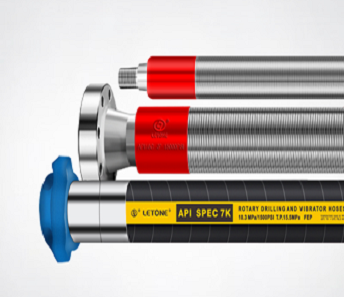
Selecting and Caring for an Oil-Resistant Fuel Hose in Daily Operation
The Selection Mistake That Starts Everything
Most fuel hose problems can be traced to a single decision made at the point of purchase. When a hose is chosen by diameter and price alone, the buyer has evaluated none of the properties that determine whether it will survive contact with fuel. The result is a hose that fits the connection perfectly and fails within weeks. Correct selection requires knowing the product to be carried, the pressure and vacuum conditions in the line, the temperature range of both the product and the environment, and the physical treatment the hose will receive. These five facts narrow the field immediately and prevent the most expensive category of mistakes.
Reading the Specification Rather Than the Appearance
Oil-resistant fuel hoses look much alike from the outside. Distinguishing between them requires attention to the specification rather than the surface. A product intended for petroleum service will state its compatibility with the relevant fuels. A product intended for suction will state a vacuum rating. A product intended for outdoor or marine use will mention resistance to ultraviolet exposure and salt-laden air. A product intended for conductive service will describe how static charge is dissipated. When these statements are absent, the buyer has no basis for confidence, and appearance should not be accepted as a substitute for documented performance.
Installation Habits That Extend Service Life
Even a correctly specified hose can be ruined by how it is installed. A hose stretched tight between two fixed points has no capacity to absorb movement, so every vibration and thermal shift loads its fittings directly. A hose bent more sharply than its specified minimum radius concentrates stress on the reinforcement at that point, and repeated flexing there will eventually deform it. A hose routed across sharp edges or through traffic lanes accumulates cover damage that eventually reaches the reinforcement. Leaving a modest amount of slack, honoring the bend radius, and protecting the cover from abrasion are unglamorous practices that reliably extend hose life.
Recognizing the Fuels a Hose Cannot Handle
Oil resistance is specific, not universal. The compounds used in fuel hoses are selected for compatibility with petroleum products, and they may perform poorly with other fluids encountered in the same facilities. Strong acids, concentrated bases, ketones, and esters can attack the inner layer in a fraction of the time a petroleum product would take. When a hose is used to move a fluid it was not designed for, failure can be rapid and difficult to explain afterward. Confirming compatibility before introducing a new fluid into an existing hose is a small check that prevents a disproportionate amount of trouble.
Inspection as a Routine, Not a Reaction
Fuel hoses give notice before they fail. A soft, spongy section suggests internal reinforcement has been compromised. A bulge or blister indicates that layers have separated. Cracking in the cover, especially in areas exposed to sunlight, marks environmental aging. A persistent odor or moisture at a fitting points to a seal or coupling problem rather than a hose failure. Inspecting hoses on a regular schedule and recording what is found allows replacements to be planned rather than improvised. This shifts hose management from a reactive practice, in which failures dictate the schedule, to a proactive one, in which the schedule prevents failures.
The Economics of Doing It Properly
It is tempting to treat fuel hoses as low-cost consumables and buy the least expensive option available. The arithmetic rarely supports this. An inexpensive hose that fails every few months consumes labor for repeated replacement, product lost to leaks, and downtime during transfers. A hose whose compound and construction are matched to the application may cost more initially and last several times as long, while exposing the operation to far fewer interruptions and far less risk. Fuel handling carries hazards that make reliability valuable in ways that are not fully captured by price. Choosing the right hose, installing it sensibly, and inspecting it routinely is the most economical approach available — and the safest.