English
 Turkish
 Dutch
 Greek
 English


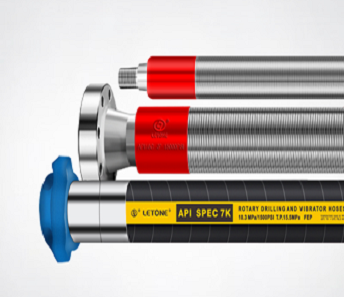
Oilfield Acidizing Operation Hose – A Safe Transportation Line of Defense Under Extreme Conditions
The Essential Need for Core Fluid Transportation in Acidizing Operations
In the core process of increasing oilfield production, acidizing is a crucial step in opening up oil and gas seepage channels and increasing single-well production. Acidizing operation hoses are the core flexible hub connecting the fracturing truck and the wellhead manifold. During operations, high-concentration acid and sand-containing fracturing fluid need to be transported over long distances under high pressure. If the pipeline experiences corrosion, leakage, pipe bursts, or delamination, it will not only directly interrupt the construction progress but may also cause on-site safety hazards. Unlike ordinary oil hoses, acidizing operations place far more stringent requirements on the pipeline's resistance to strong corrosion and high-pressure impact than conventional conditions. Specialized acidizing hoses have become a core component ensuring the smooth progress of acidizing operations.
Multi-layer Composite Structure Adapts to Highly Corrosive Conditions
Qualified oilfield acidizing operation hoses adopt a specially developed multi-layer composite structure design. Each layer, from the inside out, is specifically optimized for the unique needs of acidizing operations. The inner layer is made of a special high-polymer material resistant to strong corrosion. Even with prolonged direct contact with highly acidic media with extremely low pH values, it will not swell or peel off, preventing impurities from contaminating the acidizing solution and affecting the construction effect. The middle reinforcing layer uses a multi-strand high-strength steel wire cross-wound structure, which can completely offset the impact of instantaneous peak pressure during fracturing, maintaining structural stability and preventing bulging even under ultra-high pressure conditions. The outer layer adds a highly wear-resistant and oilfield-resistant protective layer, resisting physical damage from well site gravel scraping and heavy equipment crushing, adapting to the complex operating conditions of various field drilling sites such as the Gobi Desert, deserts, and mountains.
Comprehensive Performance Guarantee for Long-Term Stable Construction
The dynamic pressure-bearing capacity of the acidizing hose is a core indicator determining its service life. Verified by standard pulse testing, after undergoing hundreds of thousands of pressure cycles in the high-pressure range, its residual burst pressure still maintains more than 95% of the initial value. This stability is attributed to the unique steel wire cross-weaving process, which strictly controls the radial deformation of the hose within a very small range while bearing axial stress. For the specific operating conditions of some high-sulfur oil and gas fields, acidizing hoses incorporate special modified particles into the rubber matrix to form a labyrinthine sulfide barrier, significantly reducing the permeation rate of corrosive gases. Even after hundreds of hours of continuous operation in high-concentration hydrogen sulfide environments, stress corrosion cracking will not occur.
Cost Reduction and Efficiency Improvement Adapt to Modern Oilfield Development Needs
Compared to traditional rigid steel pipes, the lightweight and flexible characteristics of acidizing hoses dramatically improve pipeline deployment efficiency at well sites. For the same transport specifications, its weight is only one-third that of traditional steel pipes. Without the need for large hoisting equipment, a few operators can quickly complete pipeline laying and connection, significantly shortening the preparation time for single-well operations. Simultaneously, its flexibility absorbs the mechanical vibrations generated during fracturing operations, avoiding the weld cracking risks associated with long-term alternating stress on rigid pipelines, and significantly reducing the leakage risk during high-pressure operations. After on-site testing and comparison, the acidizing manifold built using this type of special hose can save a lot of overall operating costs compared to the traditional steel pipe system. While improving the efficiency of single-well acidizing operations, it also provides reliable hardware support for oilfield cost reduction and efficiency improvement.