English
 Turkish
 Dutch
 Greek
 English


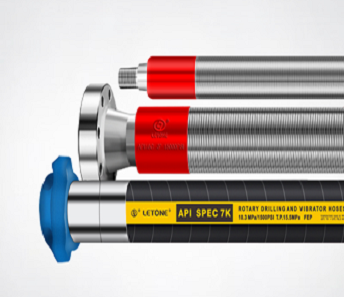
Wastewater Treatment Acid and Alkali Resistant Hose — A Reliable Backbone for Stable Fluid Transfer
Core Challenges of Fluid Transfer in Wastewater Treatment
In municipal sewage treatment plants, industrial wastewater disposal stations and heavy industrial pollution control projects, the fluid transfer process runs through every key link such as raw water intake, chemical dosing, sludge discharge and reclaimed water reuse. Conventional common rubber hoses are easily eroded by complex mixed media with variable pH values, suspended particles and corrosive chemical additives in wastewater, which often leads to inner wall cracking, layer peeling and medium leakage. The wastewater treatment acid and alkali resistant hose, as a special supporting component developed for this kind of harsh working condition, has become the core equipment to ensure the continuous and stable operation of the wastewater treatment system, and it is also an essential part to avoid secondary pollution and operation interruption.
Targeted Material and Structural Advantages
Different from ordinary industrial hoses, the wastewater treatment acid and alkali resistant hose adopts a multi-layer composite structure design optimized for the characteristics of wastewater media. The inner layer is made of high-performance acid and alkali resistant polymer material, which can maintain long-term structural stability in a wide pH range from strong acid to strong alkali, and will not suffer from swelling, corrosion and penetration even when contacting complex mixed wastewater containing chemical residues for a long time. The middle reinforcement layer is woven with high-strength synthetic fibers in a cross way, and is equipped with a continuous metal spiral skeleton for structural support. It can not only withstand the pressure fluctuation in the process of sewage and sludge delivery, but also keep the hose from collapsing and deforming under negative pressure suction conditions. The outer layer is made of wear-resistant and anti-aging protective material, which can resist the long-term friction of sediment, sludge and outdoor weathering, and will not appear brittle cracking after long-term outdoor open-air operation.
Standard Operation Specifications for On-site Application
To give full play to the performance advantages of the hose, supporting standardized operation management is essential. Before operation, confirm that the acid and alkali resistance level of the hose completely matches the pH value of the wastewater to be transported, and check that there is no damage on the hose body and no scratch on the sealing surface of the joint, so as to avoid the leakage of corrosive medium. When laying the pipeline, reserve a relaxation margin of 50 to 100 mm, keep the minimum bending radius not less than 10 times the pipe diameter, and avoid the hose being squeezed by vehicles and heavy objects. During the operation process, control the medium flow rate within the reasonable range of the process requirements, and monitor the state of the hose body in real time. Once abnormal signs such as local deformation and leakage are found, stop the machine for treatment immediately. After the operation, clean the residual sludge and medium inside and outside the hose in time, and place it in a ventilated and dry area for storage, so as to reduce the unnecessary aging loss of the material.
Comprehensive Value Brought by Long-term Stable Operation
After most sewage treatment stations replace the ordinary hoses with professional wastewater treatment acid and alkali resistant hoses, the failure rate of the fluid transfer link drops by more than 70%, and the average service life of the hoses can reach 3 to 4 times that of ordinary rubber hoses. While greatly reducing the cost of equipment replacement and maintenance, it also avoids the production shutdown loss caused by sudden hose failure and the environmental hidden danger caused by medium leakage. In the long-term continuous operation of the wastewater treatment system, its comprehensive input cost performance advantage will continue to highlight, helping the wastewater treatment plant to build a more efficient and safer fluid transmission system.